35mm Focus: Minolta's Drive for Photographic Innovation
"The history of photography is a history of moving from the manual to the automatic, and no name defines that transition quite like Minolta."
Minolta transformed from a foundational optical company into a pioneer of modern automated photography by mastering the shift from mechanical precision to electronic intelligence.
Their journey from early rangefinders to the world's first integrated autofocus SLR system changed how photographers interact with light forever.
* Minolta’s journey spans from early rangefinder roots to pioneering mechanical advancements in the mid-20th century. * The introduction of the SR-2 in 1958 marked the shift toward dedicated SLR technology. * The critical leap occurred with the introduction of the Maxxum 7000 in 1985, debuting the world's first in-camera autofocus 35mm SLR. * Minolta successfully navigated market shifts, from manual focus dominance to embracing compact and electronic formats.

When did Minolta's story begin? A heavy, brass-edged camera sits on a wooden desk, its mechanical shutter clicking with a tactile, decisive snap. This is the sound of an era where photography was a physical craft, requiring a steady hand and a keen eye for distance.
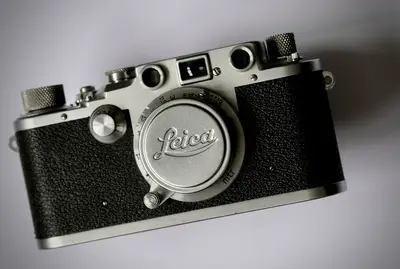
The company began its journey with the establishment of Minolta Co., Ltd. in 1928. During these formative years, the brand focused on building a foundation of optical excellence, often drawing inspiration from the Leica rangefinder concept, which utilized a 39mm screw lens-mount.
This era was defined by perfecting the glass and the mechanical connection between the user and the film.
In 1947, the company introduced the Minolta-35, a long-lived 35mm rangefinder camera that helped establish their reputation for reliability. These early models were built on the principles of precision, laying the groundwork for the more complex systems that would follow.
The transition from simple rangefinders to more advanced systems was not an overnight change, but a gradual evolution of engineering.
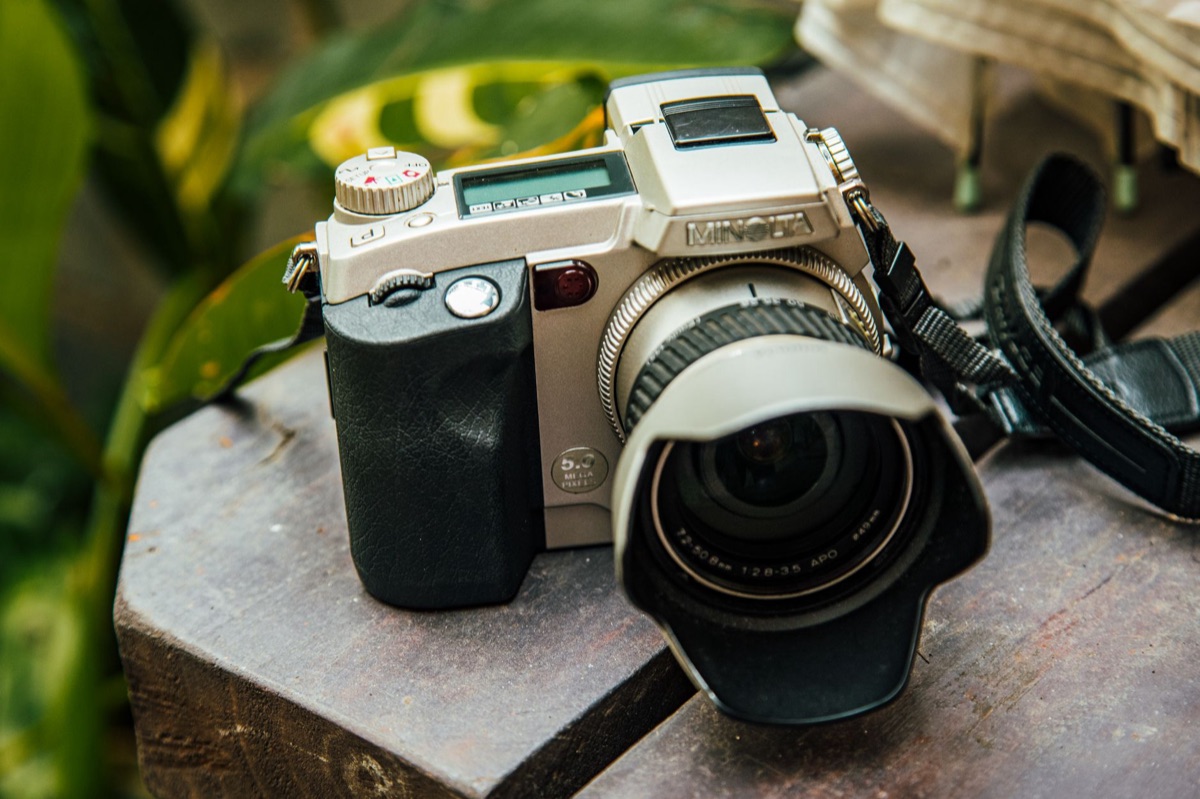
How did it evolve from rangefinder to SLR? A photographer peers through a small, bright window, adjusting a dial to match the light of a setting sun. The connection between the eye and the subject is direct, mediated by a mirror that flips up with a rhythmic mechanical dance.
The shift from rangefinders to the Single-Lens Reflex (SLR) format was a pivotal moment in the company's history. While the 1947 Minolta-35 provided a reliable tool for enthusiasts, the introduction of the SR-2 in 1958 marked a significant technological departure.
The SR-2 was Minolta's first single-lens reflex camera, moving away from the rangefinder style toward a system where the photographer could see exactly what the lens saw.
As the decades progressed, the technology became more sophisticated. By 1977, the introduction of the XD-11 represented a leap forward, serving as a first multimode 35mm compact SLR body.
This model allowed photographers to select between aperture and shutter priority, bridging the gap between purely manual control and the automated future.
This progression from the SR-2 to the XD-11 showed a clear trajectory: moving from basic mechanical operation to more complex, user-friendly control systems.
| Feature | Minolta-35 (1947) | SR-2 (1958) | XD-11 (1977) |
|---|---|---|---|
| Camera Type | Rangefinder | SLR | Compact SLR |
| Primary Focus | Portability & Ease | Mirror/Viewfinder Tech | Multimode Control |
| Key Innovation | 35mm Format Adoption | First Dedicated SLR | Aperture/Shutter Priority |
But as the mechanical mastery grew, a new challenge emerged: how to make the camera think for itself.
The Dawn of Automation: Achieving Technical Supremacy
A silent motor whirs inside a camera body, and before the photographer can even blink, the lens glides into perfect focus. This sudden shift from manual turning to automated movement felt like magic to those used to the tactile struggle of manual focusing.
The pursuit of automation became the company's primary mission in the late 20th century. In 1981, the introduction of the Minolta CLE provided a breakthrough in metering technology.
The CLE was the first 35mm rangefinder to feature through-the-lens (TTL) metering and aperture priority autoexposure, an implementation of the company's long-held patents regarding TTL and off-the-film (OTF) exposure metering.
However, the most significant revolution occurred in 1985. With the introduction of the Maxxum 7000 Alpha Mount Camera, Minolta changed the industry forever. It became the world's first autofocus 35mm SLR with an in-camera autofocus motor.
This single innovation moved the motor from the lens to the body, creating a seamless, integrated system that redefined the SLR experience.
While the Maxxum series pushed the boundaries of automation, the company continued to support the manual market with models like the X-370, X-570, and X-700 from 1981 onward, ensuring that traditionalists still had tools to work with.
This leap into automation changed everything, but it also forced the brand to look beyond the professional photographer.

Beyond the SLR: Minolta’s Adaptability
A traveler pulls a small, sleek device from a jacket pocket, snaps a quick photo of a street scene, and slides it back without a second thought. The weight of the gear is gone, replaced by the convenience of instant capture.
As the market shifted toward consumer electronics, the company had to adapt beyond the heavy professional SLR bodies. They transitioned from the rangefinder concepts of the mid-century to the electronic Point-and-Shoot (P&S) models that became popular in the 1980s.
This move allowed the brand to capture the growing market of casual photographers who wanted high-quality optics without the complexity of a full SLR.
This adaptability was a double-edged sword, requiring the company to balance its identity as a high-end optical manufacturer with the demands of a mass-market consumer base.
I remember holding an old Minolta compact from the late 80s for the first time; the weight felt surprisingly substantial for such a small device, a testament to their refusal to compromise on glass quality even in consumer models.
To understand how they managed this massive technological shift, we can look at the progression of their core development:
- Foundational Phase: Establishing optical quality through rangefinders like the Minolta-35.
- SLR Transition: Moving to the mirror-based system with the SR-2 in 1958.
- Metering Innovation: Introducing TTL/OTF metering in the CLE (1981).
- The Autofocus Revolution: Launching the Maxxum 7000 (1985) to automate the SLR experience.
- Market Diversification: Expanding into compact and electronic P&S models to meet consumer demand.
Summary of the Minolta Legacy
The history of Minolta is a roadmap of how photography moved from a manual art to a high-tech, automated science. From the early 39mm screw lens-mount designs to the groundbreaking Maxxum 7000, the company consistently pushed the boundaries of what a camera could do.
| Aspect | Description |
|---|---|
| Core Innovation | Integrated autofocus 35mm SLR systems |
| Key Milestones | SR-2 (1958), CLE (1981), Maxxum 7000 (1985) |
| Primary Impact | Shifted industry from manual to automated focus |
Who is this history for?
* Vintage Camera Collectors: Those interested in the mechanical evolution from the Minota-35 to the SR-2. * Photography Students: Anyone studying the transition from manual rangefinders to the first autofocus SLRs. * Tech Enthusiasts: Readers interested in how TTL metering and in-camera motors revolutionized imaging.
FAQ
What was Minolta's first SLR? The Minolta SR-2, introduced in 1958, was the company's first single-lens reflex camera.
How did Minolta change autofocus technology? In 1985, the Maxxum 7000 became the world's first autofocus 35mm SLR to feature an in-camera autofocus motor, marking a massive leap in automation.
What is the significance of the CLE model? The 1981 Minolta CLE was the first 35mm rangefinder to feature TTL (through-the-lens) metering and aperture priority autoexposure.
Did Minolta use Leica-style mounts? Yes, early designs were based on the Leica rangefinder concept, utilizing a 39mm screw lens-mount.

Comments 0