35mm Film: Leica's War Against Physical Limitations
"The size of the tool was once the greatest enemy of the vision."
The shift from bulky, tripod-bound plate cameras to the handheld precision of the Leica series didn't happen by accident; it was a calculated war against physics. By shrinking the optical path to fit 35mm film, Leica engineers redefined what it meant to capture a moment in motion.
* Early Leica models successfully miniaturized complex optical functions into a portable format. * The introduction of specific lens mountings and rangefinder mechanisms defined the early technical constraints and breakthroughs. * The evolution reflects a steady refinement of mechanical reliability and optical fidelity, moving from basic portability to advanced imaging tools.

What was the biggest technical hurdle for early Leica? In a dusty studio in 1925, a photographer struggles to own the moment because a heavy wooden tripod prevents him from moving with his subject. He wipes sweat from his brow, looking at a massive press camera that feels more like furniture than a tool.
The transition to the first Leica models meant fighting the physical limitations of glass and light within a tiny metal housing.
According to the Camera & Imaging Productss Association, mirrorless systems accounted for 69% of interchangeable lens camera shipments in 2022.
The primary hurdle was the sheer difficulty of scaling down high-magnification optical instruments to a handheld size. In the early days, the relationship between the lens and the viewfinder was a constant struggle for space.
Because the optical paths were tight, using a 35 mm lens often required specialized accessories. Specifically, a 35 mm lens required "goggles" that fit in front of the view/rangefinder windows to facilitate a wider view.
Engineers had to design components that could function within a much smaller footprint than the heavy press cameras of the previous century. This required a complete rethink of how light was directed toward the film plane.
The body had to be robust enough to hold the glass, yet compact enough to be truly portable.
The struggle between lens size and body integration meant that every millimeter of space was contested. Solving these geometric puzzles paved the way for the modern interchangeable lens systems we use today.
But the technical battle was only half the fight; the real problem was how the photographer actually saw the world through the glass.
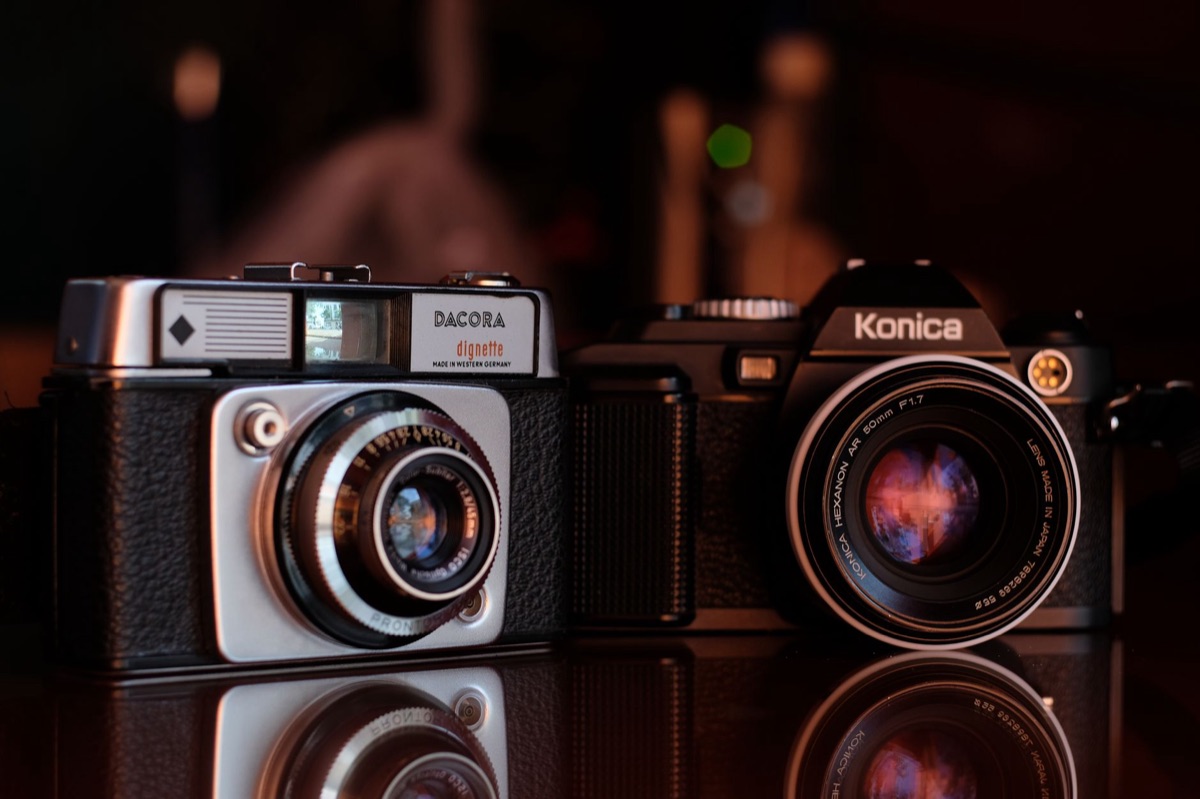
How did early models address the optical limitations of miniaturization?
At dusk, a photographer squinting through a narrow viewfinder pulls the heavy glass lens closer to his eye to find the lost horizon.
A photographer on a dim street corner in 1935 peers through a tiny window, trying to align a wide-angle shot with a narrow field of vision. The lens is much larger than the window, creating a frustrating mismatch between what the eye sees and what the film captures.
Early engineers had to find ways to bridge the gap between the lens's field of view and the camera's sighting mechanisms. Certain wide-angle lenses, such as the early 21 mm f4.0 and f3.4 models, presented a physical risk.
These specific lenses could not be used in the camera without modification because of the possibility of damage to the rear element of the lens or the meter arm.
To solve the composition problem, manufacturers began adding specialized features to the sighting systems. For instance, the introduction of added rangefinder frame lines for 35mm and 135mm lenses provided much-needed visual guidance for the user.
These lines allowed photographers to frame their shots accurately despite the compact nature of the viewfinder.
The evolution of these optical solutions turned the camera from a cumbersome box into a precision instrument. It was no longer just about having a lens; it was about how that lens communicated with the user's eye.
As the hardware became more reliable, the focus shifted toward making the tools intuitive for the person holding them.
How did early models evolve in mechanics and sighting? A technician in a workshop in 1954 carefully adjusts a tiny brass screw, feeling the click of a mechanical shutter that must be perfect every single time. The mechanical soul of the Leica was found in the precision of its rangefinder and the ease of its handling.
The shift toward more user-friendly models saw significant changes in how the rangefinder functioned. A scaled-down and lower-cost version of the M3, the M2, featured a simplified rangefinder with 0.72 magnification.
This specific design choice allowed for easier use of 35 mm lenses, making the camera more versatile for street photography.
The sighting mechanisms were the heartbeat of the user experience. Early versions often lacked the sophisticated overlays seen in later years, forcing photographers to rely on manual estimation.
As the technology matured, the inclusion of specific frame lines for different focal lengths became a standard for professional-grade work.
The relationship between the body's mechanical movements and the viewfinder experience was the key to the Leica's success. It turned the act of photography from a technical chore into an intuitive extension of the human hand.
However, as the tools became more capable, the complexity of the imaging process began to grow.
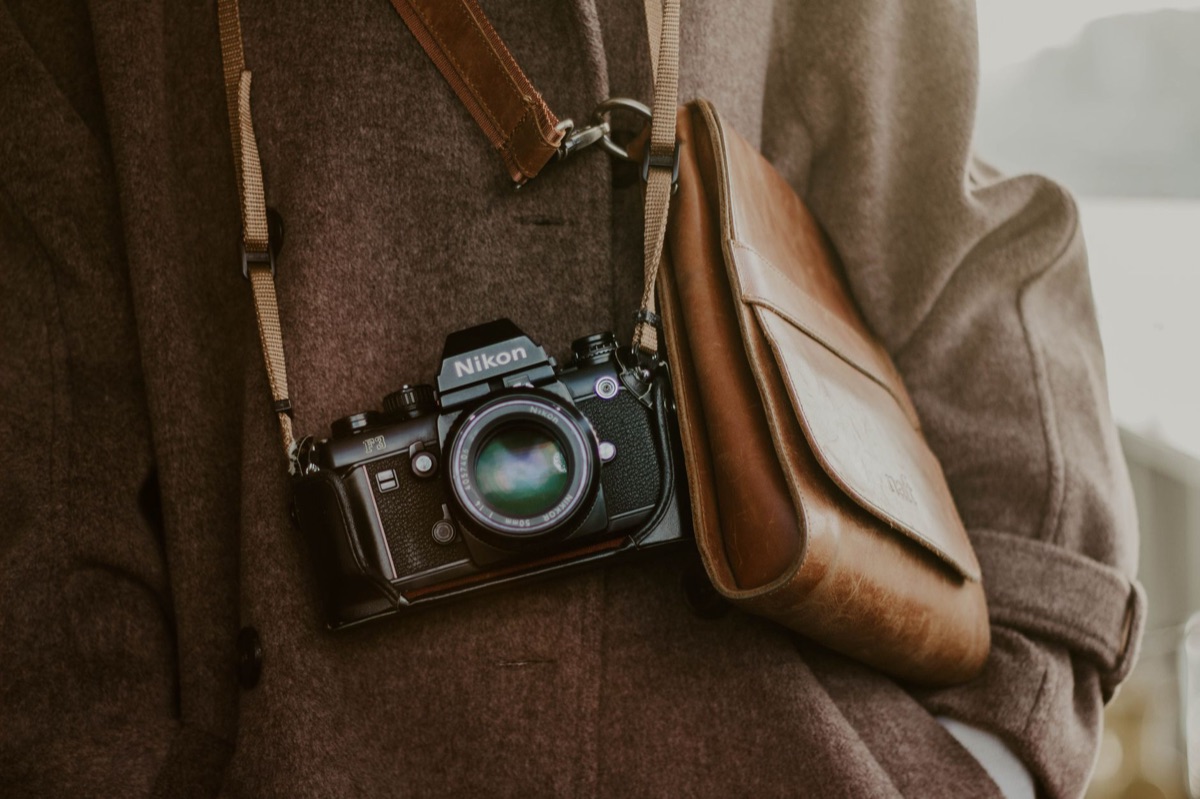
The transition to advanced imaging: Early electronic enhancements and film formats
A darkroom technician in 1958 carefully rolls a fresh sheet of film, knowing that the precision of the camera's mechanical movements will dictate the final print. The smell of developer fluid fills the small room as he prepares for the next batch.
As the industry moved toward more advanced imaging, the physical dimensions of the camera were often pushed to their limits to accommodate new features.
The integration of new optical requirements meant that the body had to evolve to support larger or more complex glass. The role of the 28mm lens in these early, highly integrated systems was crucial for expanding the possible shots.
However, accommodating these wider views often required careful mechanical design to ensure the lens didn't interfere with the camera's internal components.
The introduction of features like Auto Exposure and TTL (through-the-lens) metering would eventually change the size and shape of cameras forever. In the early era, the focus was on perfecting the mechanical link between the lens and the film plane.
The 28mm lens, in particular, pushed the boundaries of how much information could be packed into a compact frame.
These advancements were not just about convenience; they were about expanding the creative reach of the photographer. The transition from purely mechanical tools to more advanced imaging systems was a slow, careful process of balancing size and capability.
This balance between size and power is what defined the professional photographer's toolkit.
Beyond the basics: How did specific models push the boundaries of the era?
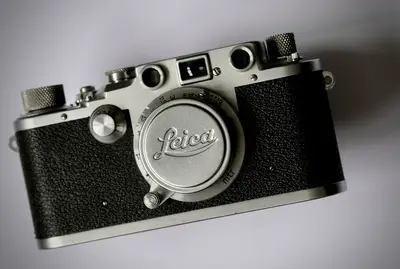
A veteran photographer looks at a vintage Leica in 2025, noting how the heavy metal construction feels like a tool meant to last a lifetime. He runs his thumb over the knurled dials, remembering the weight of the cameras he used decades ago.
The most significant milestones occurred when a model could successfully host high-performance lens pairings that defined its capabilities. The technical adaptations made to accommodate different lens sizes were often the deciding factor in a model's longevity.
For example, the ability to switch between different focal lengths without losing the accuracy of the rangefinder was a revolutionary step.
The history of these models shows a constant tension between mechanical purity and the increasing demand for electronic capability. Some models were designed to be the ultimate mechanical tools, while others paved the way for the electronic-heavy systems of the late 20th century.
By solving the problems of the early 20th century, these engineers created the blueprint for every professional camera system that followed. They proved that precision was not dependent on size, but on the mastery of the optical path.
| Feature | Early Leica Models | Modern Mirrorless Systems |
|---|---|---|
| Primary Focus | Mechanical precision & portability | Digital sensor & AI-driven AF |
| Lens Interface | Physical constraints of the body | Electronic mount for high-speed data |
| Viewfinder | Optical rangefinder / "Goggles" | Electronic Viewfinder (EVF) |
| Portability | Small, manual, and rugged | Highly compact, battery dependent |
How to evaluate a vintage optical tool: 1. Inspect the Mount: Check the lens mount for wear to ensure the mechanical connection remains tight. 2. Verify the Rangefinder: Test the focus patch accuracy by aligning subjects at different distances. 3. Examine the Glass: Check for scratches on the rear elements that might interfere with the optical path. 4. Test the Shutter: Ensure the mechanical timing is consistent across all shutter speeds. 5. Check the Seals: Inspect light seals to prevent exposure issues in older bodies.
This evolution matters to you if... * You are a collector fascinated by the mechanical history of optical engineering. s* You are a modern photographer looking to understand the roots of compact design. * You value the marriage of rugged build quality and precision optics.
#

Comments 0