Lens guide: beginner camera lens guide for your vision
"The right lens is not just about the glass; it is about the vision you want to capture through the viewfinder."
Selecting a beginner camera lens guide requires understanding how different focal lengths and mount designs serve your specific creative needs.
This guide covers how to navigate various lens series, technical specifications like mount diameter, and stabilization features to find your first essential starter lenses.
You will learn to balance versatility with specialized features, while acknowledging that lens compatibility remains a primary constraint for many photographers.
How do I begin my first camera lens choice?
In the quiet morning light, I grip the heavy glass and rotate the lens to feel the smooth mechanical click against my thumb.
A photographer stands in a bright studio, rotating a heavy lens to feel the weight and balance against the camera body. The first camera lens choice often begins with understanding the mount and the sensor size you intend to use.
For many, starting with a versatile zoom or a versatile prime lens provides the necessary foundation for learning manual controls.
The EF series, for example, includes over eighty lenses, encompassing focal lengths from 8 to 1200 mm. This wide variety allows a beginner to move from wide-angle landscapes to distant wildlife shots.
When you pick your first lens, consider whether you need a single focal length or a range that covers multiple scenarios.
According to the Camera & Imaging Products Association (CIPA), mirrorless systems continued to dominate the digital camera market in 2022, accounting for 69% of interchangeable lens camera shipments—a 31% increase from the previous year.
This shift means many beginners are looking at mirrorless mounts rather than traditional SLRs. Understanding your mount is the most critical step in avoiding compatibility issues.
- Identify your primary subject matter.
- Determine your budget constraints.
- Match the lens mount to your camera body.
What are the essential starter lenses for different scenarios?
At sunset in the meadow, I twist the versatile zoom lens to hear the mechanical hum while the golden light warms my face.
A hiker adjusts a zoom lens while trekking through a mountain pass, switching between wide and tight views. Identifying essential starter lenses involves matching the focal length to your subject matter.
Some photographers prefer the simplicity of primes, while others prefer the convenience of zooms.
The EF series offers a massive range of options to suit different needs. Because the series encompasses focal lengths from 8 to 1200 mm, it covers almost every photographic situation.
Having a wide-angle capability is helpful for landscapes, while longer focal lengths are better for portraits or wildlife.
If you are interested in specialized photography, certain lenses offer unique creative tools. For instance, the 135 mm 'Soft Focus' prime lens features a soft focus ring that enables a variable soft focus effect from completely sharp (0) to very soft (2).
This specific tool is useful for artistic portraits, though it has little effect when used with apertures over f/5.6. This kind of specialized tool shows how a single lens can serve specific aesthetic goals.
In this order, the second step is the most detailed.
How to pick first lens options based on technical specs?
A technician examines the internal diameter of a lens mount under a bright laboratory light. Learning how to pick first lens options requires a grasp of technical specifications like mount diameter and flange distance.
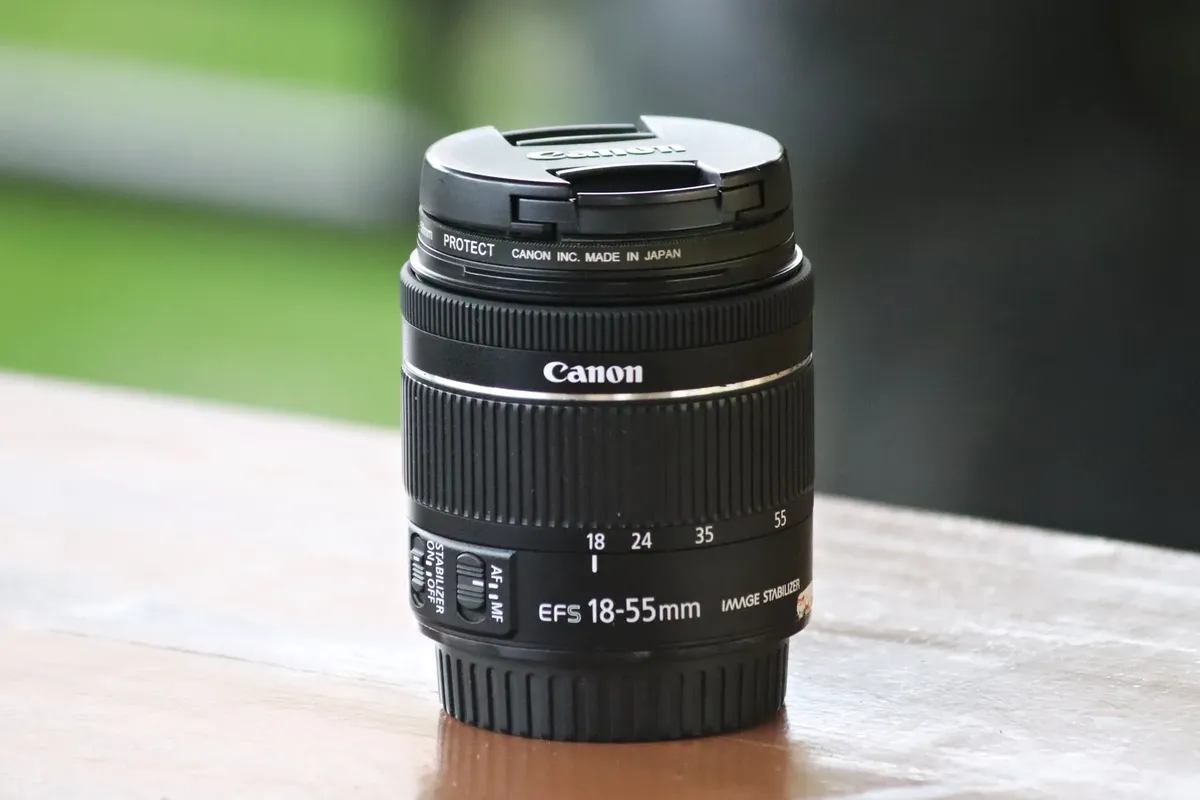
These measurements determine which lenses can physically fit onto your camera body.
The EF mount, introduced in 1987, had the largest mount diameter of 54 mm internal among all 35 mm SLR cameras. This large diameter and relatively short flange focal distance of 44.0 mm allows mechanical adaptation of EF camera bodies to many types of non-EF lenses.
This adaptability is a significant advantage for those looking to expand their kit.
When looking at older or specialized gear, technical history can provide clues about performance. For example, the 300mm f/4L IS USM lens, released in 1997, adds IS Mode 2, which detects whether panning is taking place horizontally or vertically.
It only compensates for vibration in the plane perpendicular to the plane of panning. Understanding these modes helps you select gear that handles movement effectively.
What is the best lenses for beginners comparison?
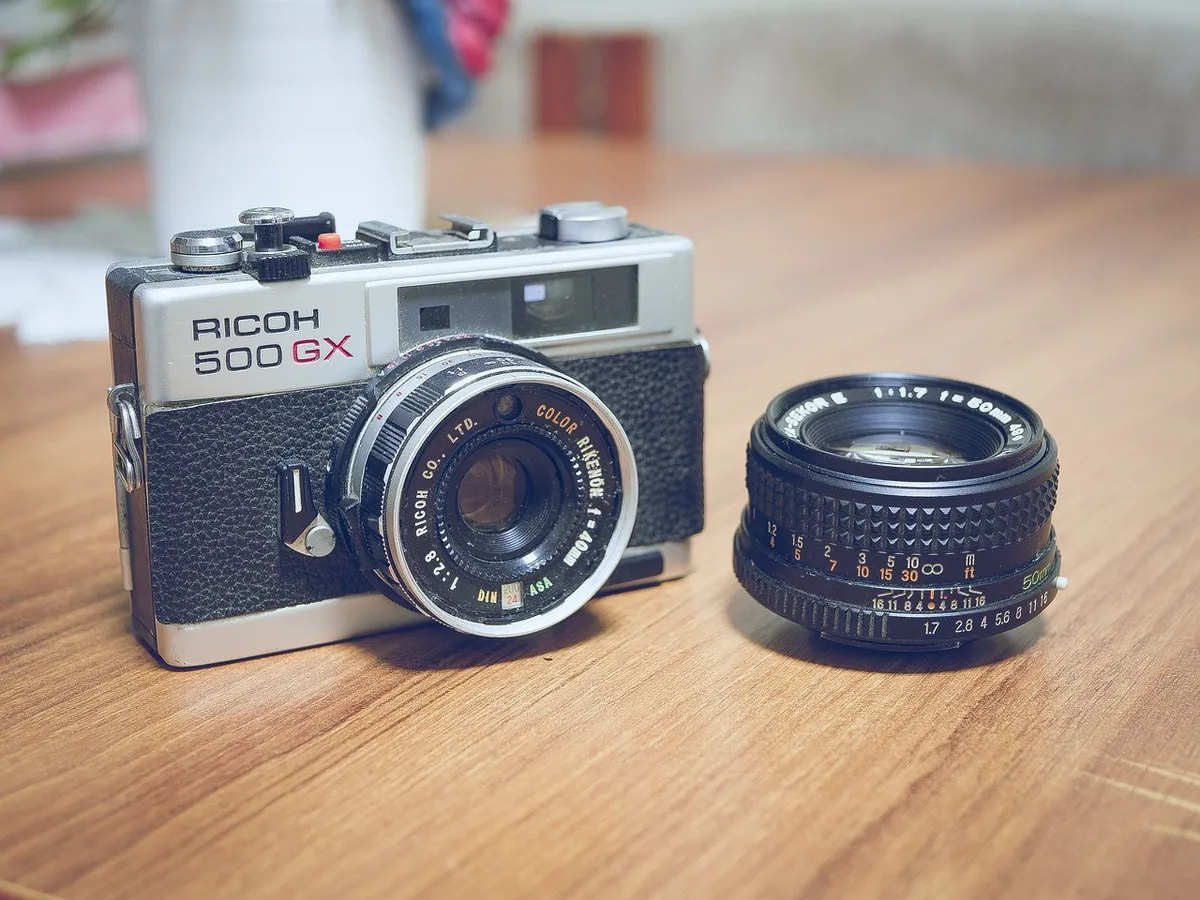
A student compares two different lenses side-by-side on a wooden desk, noting the difference in size and weight. Choosing the best lenses for beginners often involves comparing zoom lenses against prime lenses.
Zoom lenses provide versatility, while prime lenses often offer better light-gathering capabilities and sharper images.
| Feature | Zoom Lenses | Prime Lenses |
|---|---|---|
| Versatility | High (Multiple focal lengths) | Low (Fixed focal length) |
| Subject Range | Wide (e.g., 8 to 1200 mm) | Specific (e.g., 135 mm) |
I remember looking at my first set of options and wondering if a single versatile zoom could replace several primes. While a zoom might cover many bases, a prime lens like the 135 mm 'Soft Focus' offers unique artistic effects that a standard zoom cannot replicate.
Finding the right balance depends on your budget and your specific subject matter.
How do stabilization and motor technologies work?
A photographer stabilizes their hands while tracking a moving subject through a telephoto lens. Understanding how to pick first lens is easier when you know about Image Stabilization (IS) and motor types like USM or Nano USM. These technologies help manage shake and ensure fast, quiet autofocus.
Some newer lenses, such as the Canon EF-S 18-200mm lens, are able to detect if they are being panned in either axis and will automatically disable the stabilization for the axis parallel to movement. This prevents the stabilizer from fighting the intentional movement of the photographer.
This automation is a great feature for beginners who are still mastering panning techniques.
Different motor technologies also affect the shooting experience. Ultrasonic motor (USM) lenses, which first appeared with the EF 300 mm f/2.8L USM in 1987, provide fast and quiet autofocus. Later, Nano USM was introduced in 2016 with the release of the EF-S 18–135mm lens.

These advancements make it easier to capture sharp images in various lighting and movement conditions.
How to apply these steps to your purchase?
A buyer sits at a computer, carefully reviewing lens compatibility charts before clicking "order." To move from theory to practice, follow these steps to ensure your selection is correct.
- Identify your camera mount type and sensor size to ensure physical and electronic compatibility. 2. Determine your primary subject matter to decide between a versatile zoom or a specialized prime. 3. Check for essential features like Image Stabilization or specific motor types (USM) that match your shooting style.
Always perform a final check by verifying the flange distance and mount diameter of your chosen lens against your camera's specifications. A limitation to keep in mind is that the 135 mm 'Soft Focus' prime lens's variable soft focus effect has little effect when used with apertures over f/5.6.
Related




Comments 0